

Where sales incentives sit in today’s commercial environment
Sales incentives are most commonly used in B2B organizations with complex or indirect buying models, including SaaS, technology vendors, distribution networks, channel programs, and professional services firms.
Commercially, a sales incentive sits between base compensation and go-to-market execution. It is one of the few levers leaders can use to redirect behavior quickly when markets tighten, priorities shift, or growth depends on more than topline volume.
That pressure is measurable. In 2023, only 28% of sales representatives met or exceeded quota, down from 44% the previous year (Salesforce, State of Sales, 2023). At the same time, sales cycles continue to lengthen. For companies with average contract values between £40,000 and £80,000, deals now take an average of nine months to close (Norwest Venture Partners, 2024).
In the current climate, incentives are no longer just about selling more. They are about selling well, protecting margin, activating partners, and reinforcing strategic focus across increasingly complex sales motions.

What a sales incentive actually is (and what it is not)
A sales incentive is a structured reward mechanism designed to influence specific sales behaviors or outcomes beyond base salary or standard commission.
In practice, sales incentives are used to drive focus on what matters now, for example, product launches, partner engagement, pipeline quality, or renewal health (rather than rewarding everything equally).
A sales incentive is not:
- Commission (ongoing transactional pay tied directly to deals)
- A generic bonus (a retrospective reward for overall performance)
What we see in practice is that sales incentives work best when they are time-bound, outcome-led, and explicitly behavioral, rather than vague or open-ended.
Research from the Incentive Research Foundation confirms this: targeted incentive programs increase total sales by an average of 32% compared to non-incentivized equivalents (IRF, 2023). Even our own data backs this: Incentive Benchmark Report
Sales incentive vs commission (why the distinction matters globally)
Conclusion: treating incentives like commission is one of the fastest ways programs break down.
Commission tends to be predictable and contractual. A sales incentive program is discretionary, strategic, and designed to change behavior for a defined period.
Across real sales and channel programs, most issues do not start with performance. They start with blurred boundaries. Teams assume incentives behave like commission, leaders assume flexibility, and no one aligns expectations early.
Clear separation improves:
- Transparency
- Trust
- Governance
- Long-term credibility of the program

Types of sales incentives that work in real organizations
Conclusion: incentives fail when they reward outcomes teams cannot control.
Effective sales incentive programs typically combine:
Direct incentives
These reward outcomes an individual or role can directly influence. For example, qualified pipeline, margin thresholds, or deal progression.
Indirect incentives
These reward behaviors that contribute to success but do not close revenue alone. For example, partner enablement, deal registration, and account planning. This distinction is critical in indirect and channelled environments, where influence and attribution are rarely clean.
How to design a sales incentive program that holds up under pressure
Conclusion: design should start with constraints, not rewards.
- Start with the specific business problem
Incentives work best when they address one clear commercial challenge at a time. For example, low partner engagement or poor pipeline quality.
- Define the behavior that actually drives the outcome
Revenue is the result, not the behavior. Strong programs reward the actions that consistently lead to revenue across the real selling environment.
- Make progress visible, not just payouts
Across real programs, engagement drops sharply when participants cannot see how they are tracking until the end of the program. This is not anecdotal; 87% of channel program managers reported concern about under-engagement and unclaimed incentive budgets in 2023 (360insights, State of Channel Incentives, 2023). Lack of real-time visibility is consistently cited as a primary driver.
- Test for unintended consequences
A common failure example is an incentive that increases short-term volume but damages margin, trust, or partner relationships because qualification rules were unclear.
Governance, compliance, and trust (global reality)
Conclusion: Governance is not friction. It is what allows programs to scale.
As sales incentives grow in scale or geographic reach, they increasingly intersect with:
- Employment and contract structures
- Tax treatment and reporting
- Internal compliance expectations
- Brand and customer trust
What we see across mature incentive programs is that governance is the difference between incentives that drive sustainable growth and those that quietly create risk.
The commercial case for getting this right is clear. Well-designed incentive and B2B loyalty programs generate a minimum return on investment of 2:1 to 4:1, and one in three programs in the sector exceeds even the 4:1 threshold (Incentive & Engagement Solution Providers, via Sales and Marketing Magazine). Well-governed programs also deliver a minimum of 5-10% year-over-year revenue lift over baseline, and comparable improvement in partner retention (IESP, 2021).
Programs that are transparent, auditable, and clearly communicated outperform those built on exception handling and manual interpretation.
All incentive activity referenced in this article is intended to operate within applicable legal, financial, and governance frameworks. Program design should be reviewed against relevant employment law, tax obligations, and internal compliance policies before deployment.

Sales incentive programs in practice (before and after)
Before:
Manual spreadsheets, delayed reporting, inconsistent interpretation across regions, frequent disputes, low trust.
After:
Clear qualification rules, real-time visibility, consistent application across markets, fewer exceptions, higher engagement.
This shift rarely happens because companies want more technology. It happens because incentives become business-critical and manual systems stop working.
Should you manage sales incentives manually, outsource them, or use software?
Conclusion: the right approach depends on scale, complexity, and risk tolerance.
Manual (DIY)
Works for very small teams or short pilots. Breaks down quickly as rules, regions, and participants increase. A 2023 audit of spreadsheet-based incentive tracking found that 88% of spreadsheets contain significant errors, directly causing incorrect payouts and partner disputes (University of Hawaii / Raymond Panko, 2023). A separate 2024 survey of channel operations professionals found that 63% of manufacturers still rely on manual data entry for performance tracking, resulting in an average 12% discrepancy in annual incentive payouts (Computer Market Research, 2024).
Outsourced (agency-led)
Effective for high-touch or experience-based programs. Less flexible for iteration and ongoing optimisation.
Sales incentive software
Best suited when incentives are central to go-to-market strategy, requiring real-time tracking, consistency, and governance across teams or partners.
Across real programs, organizations typically move to software once incentives transition from experimental to essential. The data supports this. In 2024, approximately 60% of Market Development Funds go unclaimed, in large part because manual tracking creates administrative complexity that partners disengage from (industry data, 2024). Automating claim and validation processes directly addresses this loss.
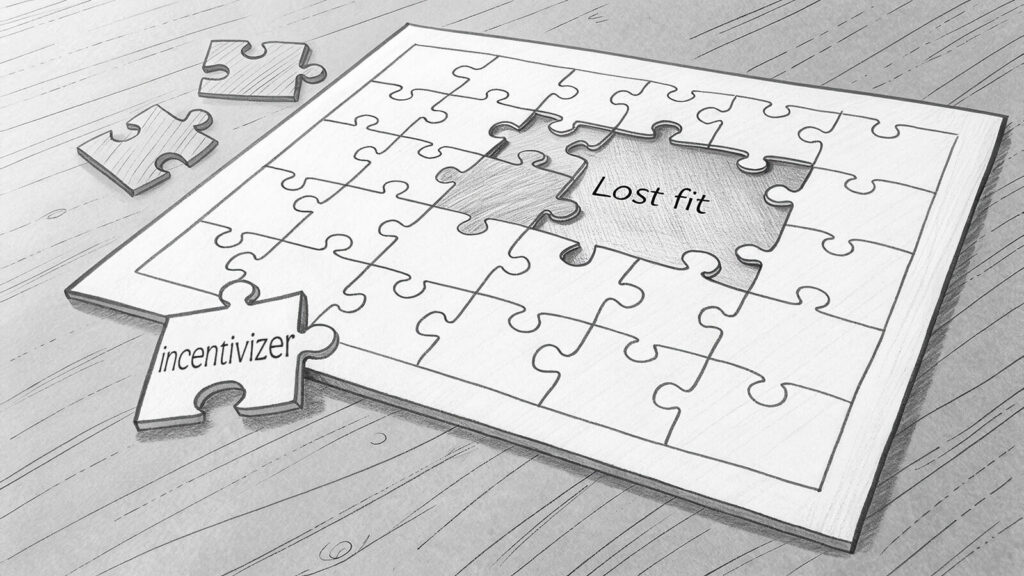
When sales incentive programs create real advantage
A sales incentive is not a silver bullet. But in complex, global sales environments with longer buying cycles and tighter scrutiny, it remains one of the most effective ways to focus behavior without rewriting compensation models.
The evidence supports the investment. Targeted programs lift sales by an average of 32%. Well-governed programs return a minimum of 2:1 ROI. Poorly managed ones, built on manual tracking, blurred rules, and delayed reporting, produce the opposite: wasted budgets, disengaged partners, and disputes that erode trust over time.
When designed with clarity, governed with intent, and supported by the right operating model, a sales incentive program aligns teams, partners, and priorities in ways few other tools can.
Used carelessly, it does the opposite.
Running a channel incentive program that isn’t delivering?
We audit incentive programs that have hit a ceiling and identify whether the problem is design, governance, or the operating model behind them. Talk to us before the next budget cycle.